
No Canadian Experience? How Newcomers Land Their First Tech Job in Canada
Last reviewed: October 19, 2026
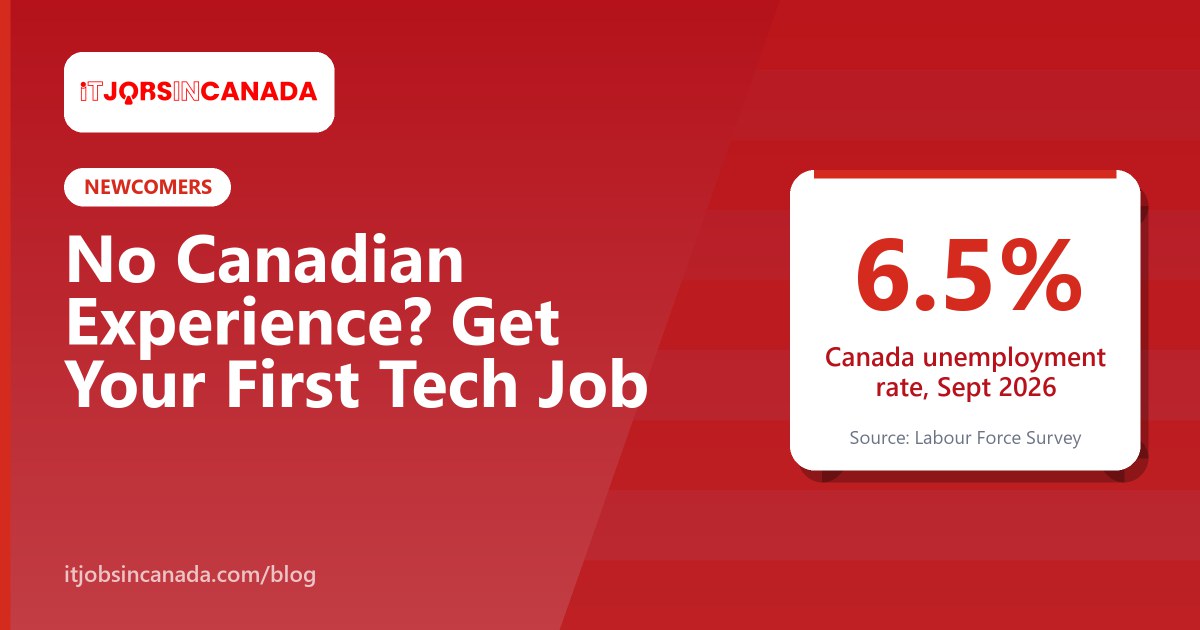
Short answer: when employers ask for Canadian experience, they usually mean proof that you can work well in a Canadian workplace: communication style, teamwork, and local tools and standards. Newcomers can bridge that gap through a Canadian-format resume, networking and referrals, bridging programs, contract or volunteer roles, and local certifications. The job market is tough right now, with unemployment at 6.5% in September 2026 (Statistics Canada), so a focused strategy matters. In Ontario, employers generally can't require Canadian work experience in job postings.
Key takeaways
- "Canadian experience" usually means workplace communication and local context, not just a Canadian employer on your resume.
- Referrals are one of the most effective ways into Canadian tech jobs.
- Bridging programs and settlement agencies offer free help for newcomers.
- Since January 1, 2026, Ontario law generally bans Canadian experience requirements in job postings.
- Unemployment: 6.5%; youth: 13% (September 2026).
What do employers mean by "Canadian experience"?
Usually not your technical skills. They want confidence that you'll communicate clearly in meetings and email, understand Canadian workplace norms, know local regulations (such as privacy laws like PIPEDA), and fit into agile teams. You can show all of this without having worked for a Canadian company.
Is it legal to require Canadian experience?
In Ontario, the Working for Workers Four Act, 2024 has generally prohibited employers, since January 1, 2026, from including Canadian work experience requirements in publicly advertised job postings or application forms. The Ontario Human Rights Commission has also said that a strict requirement for Canadian experience can be discriminatory. Other provinces have different rules, so check your province.
How to land your first tech job in Canada
- Rewrite your resume the Canadian way: 1–2 pages, no photo or personal details, results with numbers. See our Canadian tech resume guide.
- Get referrals. Join local meetups, tech communities and LinkedIn groups. Reach out to people in roles you want and ask for advice, not jobs.
- Use free newcomer services: settlement agencies and bridging programs offer resume reviews, mentoring and employer connections.
- Consider contract or short-term roles to build local references quickly.
- Get a recognized certification in cloud, security or data. See the most in-demand tech skills.
- Apply beyond Toronto and Vancouver: Calgary, Edmonton, Ottawa, Winnipeg and Waterloo have strong tech scenes and less competition.
Should you take a lower-level job first?
Sometimes a step down, for example from senior developer abroad to intermediate developer in Canada, can be the fastest way in, especially if the company offers growth. But don't undersell yourself. Use salary data to stay realistic. See our software engineer salary guide.
Common mistakes newcomers make
- Sending the same resume to hundreds of jobs instead of tailoring it.
- Relying only on online applications without networking.
- Listing every technology instead of proven results.
- Not preparing for behavioural interview questions ("Tell me about a time when…").
Next steps
Create a free ITjobsinCanada account and browse the latest IT jobs in Canada, including Calgary, Edmonton, Ottawa and Winnipeg. Still abroad? Read our guide to the Global Talent Stream and Express Entry.
Sources
- Statistics Canada, Labour Force Survey, September 2026
- Ontario, Working for Workers Four Act, 2024 (job posting rules in force January 1, 2026)
- Ontario Human Rights Commission, policy on removing the "Canadian experience" barrier
ðŸ·ï¸ Tags
Frequently asked questions
What does Canadian experience mean?
Usually proof that you can work well in a Canadian workplace: clear communication, teamwork and knowledge of local tools, standards and regulations, not just a Canadian employer on your resume.
Can employers require Canadian experience in Ontario?
Generally no. Since January 1, 2026, Ontario\'s Working for Workers Four Act, 2024 prohibits Canadian work experience requirements in publicly advertised job postings and application forms.
How can newcomers get a tech job in Canada?
Use a Canadian-style resume, network for referrals, use free settlement and bridging programs, consider contract roles, earn a recognized certification and apply in cities beyond Toronto and Vancouver.
Are there free programs for newcomers in Canada?
Yes. Settlement agencies and bridging programs offer free resume reviews, mentoring, workshops and connections to employers.
Which Canadian cities are easier for tech newcomers?
Calgary, Edmonton, Ottawa, Winnipeg and Waterloo often have less competition than Toronto and Vancouver, with strong tech employers.
Should newcomers accept a lower-level tech job?
Sometimes a step down can be the fastest way into the Canadian market, especially with growth potential, but use salary data so you do not undersell yourself.
Author
No Canadian experience? Practical steps for newcomers to land a first tech job in Canada in 2026: resumes, networking, bridging programs and your rights.About This Blog
No Canadian experience? Practical steps for newcomers to land a first tech job in Canada in 2026: resumes, networking, bridging programs and your rights.